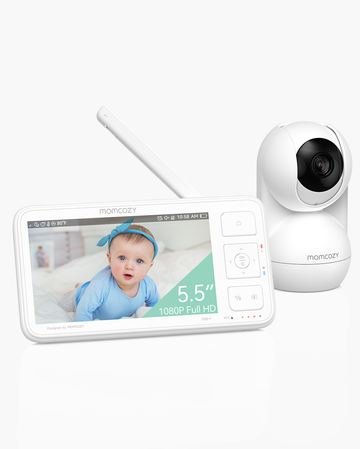
Un babyphone est véritablement intelligent lorsqu'il traite activement les données pour fournir des alertes utiles et une analyse du sommeil, plutôt que de simplement diffuser des images. Pour bien choisir un babyphone intelligent, il faut privilégier les modèles intégrant une intelligence artificielle capable de filtrer les bruits de fond et de suivre la respiration de manière passive. Ces technologies fiables peuvent vous aider à surveiller des situations liées au sommeil, comme le retournement sur le ventre, tout en suivant les directives de sommeil sécurisé qui recommandent de coucher bébé sur le dos. Continuez votre lecture pour découvrir les fonctionnalités de sécurité et de confidentialité incontournables à vérifier avant d'acheter.
💡 Points clés à retenir
- Un babyphone véritablement intelligent utilise l'intelligence artificielle pour filtrer les notifications, distinguant les pleurs réels et les mouvements importants des simples bruits de fond.
- Une résolution HD 2K combinée à une vision nocturne infrarouge de 940 nm permet une surveillance visuelle nette dans l'obscurité totale sans émettre de lumière visible susceptible de perturber le sommeil de l'enfant.
- La technologie de surveillance sans contact analyse la respiration et les cycles de sommeil de manière passive, générant des rapports détaillés sans nécessiter d'appareils portables attachés au bébé.
- La sécurité des données et des flux vidéo exige un chiffrement de bout en bout AES 256 bits, des contrôles d'autorisation stricts par utilisateur et des options de stockage local.

Ce que "intelligent" signifie vraiment pour un babyphone
"Intelligent" dans un babyphone devrait signifier que l'appareil traite activement les informations et en fait quelque chose d'utile, et non pas qu'il se contente de diffuser des images sur votre téléphone.
Un babyphone véritablement intelligent détecte les changements dans les mouvements de votre bébé, l'environnement de la chambre et les habitudes liées au sommeil. Il envoie des notifications intelligentes qui ont vraiment un sens, au lieu de vibrer à chaque petit mouvement. Et au fil du temps, il dresse un portrait du sommeil de votre bébé qui vous aide à prendre de meilleures décisions en tant que parent.
Si un babyphone se contente de diffuser des vidéos et d'émettre un bip au moindre son, c'est une caméra avec un haut-parleur. Ce n'est pas un babyphone intelligent.
Les caractéristiques principales qui rendent un babyphone vraiment intelligent
Surveillance vidéo en temps réel et vision nocturne
La qualité vidéo compte plus que ne le suggèrent les fiches techniques. Une résolution HD 2K est nettement plus nette que le 1080p standard. Vous pouvez voir clairement la position de sommeil et l'expression du visage de votre bébé, et pas seulement une forme vague dans l'obscurité.
La vision nocturne compte tout autant. Recherchez la technologie infrarouge 940 nm. Cette longueur d'onde est totalement invisible à l'œil humain, elle ne perturbera donc pas le sommeil de votre bébé tout en offrant des images très contrastées dans une pièce complètement sombre.
Une fonction de zoom complète le tout. Pouvoir regarder de plus près sans entrer dans la chambre permet de garder un environnement calme la nuit.
Audio bidirectionnel pour un réconfort instantané
Votre voix peut rendormir un bébé plus rapidement que vous ne le pensez. L'audio bidirectionnel vous permet de répondre dès que vous entendez des mouvements, avant qu'un petit gémissement ne se transforme en gros pleurs.
L'audio à faible latence est le point à vérifier ici. Les retards ou les grésillements rendent cette fonctionnalité frustrante en pratique, surtout la nuit.
Détection de mouvement, de son et d'activité
La détection de mouvement basique est courante. La détection intelligente est ce que vous recherchez réellement.
Un babyphone bien conçu utilise l'IA pour filtrer ce qui est signalé. Pour les mouvements, il devrait aider à distinguer les changements de position normaux des situations liées au sommeil que les parents pourraient vouloir vérifier, comme le fait de rouler sur le ventre ou un visage possiblement couvert. Pour le son, une couche d'IA distincte devrait distinguer les vrais pleurs des bruits de fond ou d'autres sons de la maison.
Sans ce filtrage, on se lasse vite des alertes. Trop de notifications et vous commencez à les ignorer, ce qui va à l'encontre du but recherché.
Des babyphones intelligents qui offrent plus que des notifications
Surveillance de la respiration et des mouvements
C’est ici que les choses deviennent véritablement utiles. Le babyphone intelligent sans contact Momcozy BM08 utilise une détection sans contact pour suivre la respiration et générer des rapports liés au sommeil, sans chaussettes, patchs ni capteurs portables.
L'absence de dispositif portable signifie également qu'il n'y a rien à charger, rien à accrocher et rien que votre bébé puisse arracher au milieu de la nuit.
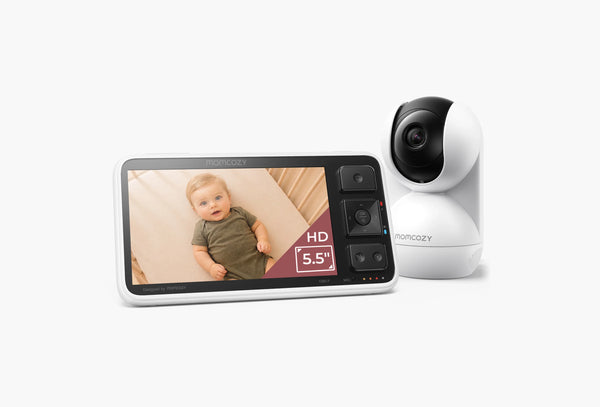
Member price
From€99,99
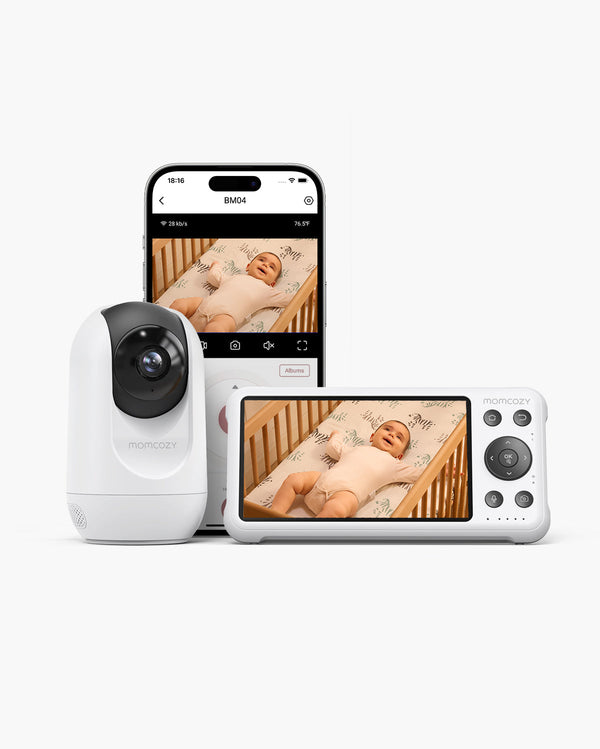
Résumés et rapports de sommeil
Lorsque les informations liées au sommeil sont combinées avec des résumés de sommeil, cela devient plus utile pour les routines quotidiennes. Un babyphone qui indique quand votre bébé s'endort, les moments de réveil et les résumés de sommeil peut vous aider à mieux comprendre ses habitudes nocturnes.
Au fil des jours et des semaines, des tendances se dessinent. Cela vous aide à ajuster les programmes de sommeil, à affiner les heures de repas et à remarquer les changements de routine qui méritent qu'on y prête attention.

Intégration de l'application pour un accès partout
L'accès à distance signifie que vous n'êtes pas lié à un écran dans la chambre de bébé. Vous pouvez garder un œil depuis le salon, votre bureau ou une chambre d'hôtel.
La connectivité de l'application signifie également que les notifications push vous parviennent même lorsque vous ne regardez pas le flux vidéo. Vous recevrez des notifications intelligentes pour les mises à jour liées au sommeil, les mouvements ou les pleurs détectés, où que vous soyez.
Le partage de compte avec des contrôles d'autorisation est également important. Cela permet à un partenaire, un grand-parent ou une nounou de rester informé sans modifier vos paramètres de confidentialité.
Fonctions intelligentes supplémentaires qui facilitent la parentalité au quotidien
Quelques ajouts rendent la vie quotidienne avec un babyphone intelligent nettement plus facile.
L'apaisement automatique diffuse un bruit blanc intégré ou des berceuses dès que des pleurs sont détectés. Cela peut calmer votre bébé avant même que vous ne sortiez du lit.
La capture automatique prend des photos ou de courts clips lorsque le babyphone détecte un mouvement ou une activité notable, afin que vous ne manquiez pas les moments clés pour lesquels vous n'étiez pas dans la pièce.
Un support portable et flexible voyage également bien, de sorte que votre installation fonctionne de la même manière à la maison ou dans une chambre d'hôtel.

Pourquoi les fonctionnalités intelligentes sont importantes pour les parents
Accompagnement quotidien pour le suivi du sommeil
Les directives de sommeil sécurisé recommandent de dormir sur le dos, mais les bébés bougent et se retournent au fur et à mesure de leur développement. Vous ne pouvez pas veiller toute la nuit. Un babyphone qui envoie des notifications pertinentes pour les situations liées au sommeil peut aider à réduire les vérifications inutiles et favoriser des nuits plus calmes.
Le babyphone intelligent sans contact Momcozy BM08 est conçu pour fournir des notifications intelligentes liées au sommeil et un soutien quotidien pour la surveillance, aidant les parents à savoir quand il peut être temps d'aller vérifier.
La connexion parent-enfant
L'audio bidirectionnel est plus qu'un outil de sécurité. Lorsque votre bébé entend votre voix à travers le babyphone la nuit, cela renforce son sentiment que vous êtes à proximité. De petites interactions comme celle-ci favorisent l'attachement et la sécurité émotionnelle au fil du temps.
Les rapports de sommeil peuvent également aider. Savoir que votre bébé est dans un sommeil léger plutôt que dans un sommeil profond vous aide à décider s'il faut lui accorder un moment ou répondre immédiatement. C'est le genre d'informations qui renforce l'intuition parentale.
Tranquillité d'esprit et confiance
La confiance parentale se résume souvent à l'information. Lorsque vous pouvez vérifier le sommeil de votre bébé et recevoir des notifications intelligentes lorsque le babyphone détecte une activité liée au sommeil, vous pouvez vous permettre de vous reposer.
C'est à cela que sert vraiment un babyphone intelligent. Non pas pour que vous regardiez un écran toute la nuit, mais pour veiller à votre place.
Un babyphone vraiment intelligent doit aussi être sûr
Connexions sécurisées et chiffrées
Les images de la chambre de votre bébé sont privées. Tout babyphone intelligent devrait les protéger avec un chiffrement de bout en bout. La norme de l'industrie est l'AES 256 bits.
Au-delà du chiffrement, recherchez :
-
Des contrôles de confidentialité, tels qu'un mode qui désactive l'accès à la caméra et à l'audio en cas de besoin
-
Des contrôles d'autorisation par utilisateur pour toutes les personnes avec qui vous partagez l'accès
-
Des options de stockage local qui évitent de conserver les images sur des serveurs cloud publics
Conception à faible émission et plus sûre pour les bébés
La détection par ondes millimétriques fonctionne à faible puissance et est utilisée dans de nombreuses applications de détection au quotidien. Son fonctionnement n’a rien à voir avec celui d’un signal de téléphonie mobile.
Pour la vision nocturne, la lumière infrarouge de 940 nm est totalement invisible à l'œil humain et n'émet aucune lueur visible. Les anciens systèmes de 850 nm émettent une légère lueur rouge que la technologie 940 nm évite complètement.
La technologie intelligente doit soutenir, et non remplacer, la parentalité
Un babyphone ne remplace pas votre présence. Ce qu'il fait, c'est réduire les heures que vous passez à regarder anxieusement un écran, afin que vous puissiez être plus présent lorsque cela compte.
Un système bien conçu reste silencieux la plupart du temps et réagit rapidement quand c'est important. C'est l'équilibre qu'il faut rechercher.
Ce qu'il faut rechercher lors du choix d'un babyphone intelligent
Voici un bref résumé de ce qu'un babyphone véritablement intelligent devrait offrir. Utilisez-le comme liste de contrôle lorsque vous comparez vos options.
|
Fonctionnalité |
Ce qu'il faut rechercher |
|
Qualité vidéo |
HD 2K pour des détails clairs de jour comme de nuit |
|
Vision nocturne |
Infrarouge 940 nm, totalement invisible, aucune perturbation du sommeil |
|
Suivi de la respiration |
Détection sans contact qui suit la respiration pendant le sommeil |
|
Notifications intelligentes |
Notifications assistées par l'IA pour les activités significatives, et non pour chaque petit mouvement |
|
Accès via l'application |
Visualisation à distance, notifications push, partage de compte |
|
Chiffrement |
AES 256 bits de bout en bout avec option de stockage local |
|
Rapports de sommeil |
Enregistrement automatique des phases avec des données de tendance à long terme |
|
Installation |
Support flexible qui fonctionne à la maison et en voyage |
Une fois que vous avez une liste de sélection, voici comment évaluer ce que vous obtenez réellement.
Comment évaluer la qualité de la vidéo et de la connexion
Ne vous fiez pas uniquement aux spécifications. Consultez les avis des utilisateurs, en particulier sur la qualité de l'image de nuit et la stabilité de la connexion à travers les murs. Un babyphone qui perd le signal ou qui présente des décalages lors de la lecture vous frustrera, quelles que soient ses autres fonctionnalités.
Comment savoir si le système de notification est vraiment intelligent
Posez-vous une question : ce babyphone vous avertit-il pour tout, ou aide-t-il à filtrer les moments importants ? Recherchez des détails publiés sur la logique des alertes et les paramètres de sensibilité personnalisables. Ce sont des signes que le système a été conçu pour réduire le bruit, et non pas simplement pour maximiser les notifications.
Comment évaluer l'application avant d'acheter
Téléchargez l'application avant l'achat si possible. Consultez les avis récents pour repérer les plaintes concernant des pertes de connectivité ou des interfaces encombrées. Une application peu fiable ou difficile à naviguer rend l'ensemble du babyphone plus difficile à utiliser au quotidien.
Ce qu'il faut vérifier concernant la sécurité et la confidentialité
Lisez la politique de confidentialité, pas seulement la page du produit. Confirmez où les données vidéo sont stockées, qui peut y accéder, et si l'entreprise propose un stockage local. Les meilleurs babyphones sont transparents à ce sujet et vous laissent le contrôle.
Trouver un babyphone qui fait le travail pour vous
Un babyphone intelligent ne se résume pas à la plus longue liste de spécifications. Il s'agit d'avoir moins de nuits à surveiller avec anxiété et plus de nuits de vrai sommeil. Le bon modèle vous aide à vérifier ce qui compte, envoie des notifications intelligentes lorsque cela est nécessaire et se fait oublier le reste du temps.
Le babyphone intelligent sans contact Momcozy BM08 a été conçu dans cet esprit : détection et rapports de sommeil sans contact, suivi de la respiration, notifications intelligentes, vision nocturne HD 2K et chiffrement complet, sans aucun abonnement requis. Trouvez le vôtre et voyez ce qui convient le mieux à votre famille.
FAQ sur les éléments essentiels d'un babyphone intelligent
Q1 : Les babyphones intelligents nécessitent-ils un abonnement mensuel ?
Pas toujours. Certaines marques réservent les rapports de sommeil avancés liés à la santé à un abonnement payant. D'autres incluent les fonctionnalités de base lors d'un achat unique. Avant d'acheter, vérifiez exactement quelles fonctionnalités nécessitent un abonnement et si la version gratuite est réellement utile au quotidien.
Q2 : Que signifie le suivi de la respiration sans contact ?
Il s’agit de rapports liés au sommeil, obtenus sans contact, qui aident les parents à mieux comprendre les mouvements de leur bébé pendant son sommeil. Ce ne sont pas des mesures médicales et ne doivent pas remplacer une surveillance ou un avis médical professionnel.
Q3 : La détection sans contact peut-elle fonctionner lorsqu'un bébé bouge sous une couverture ?
La détection sans contact peut aider à capturer les habitudes de mouvement liées au sommeil sans appareils portables, mais elle ne doit pas être considérée comme une détection médicale de la respiration. Suivez toujours les directives de sommeil sécurisé et utilisez le babyphone comme un soutien à la surveillance quotidienne à domicile.
Q4 : Comment savoir si l'utilisation d'un babyphone est sûre dans la chambre de bébé ?
Recherchez un chiffrement de bout en bout AES 256 bits, un mode de confidentialité qui coupe l'enregistrement instantanément, et une politique de stockage des données claire. Le babyphone intelligent sans contact Momcozy BM08 est conçu pour accompagner la surveillance quotidienne à domicile et n'est pas un dispositif médical. Évitez les babyphones de marques qui ne publient pas leur documentation de sécurité.
Q5 : À quel âge puis-je arrêter d'utiliser un babyphone ?
Cela varie selon les familles. La plupart des parents utilisent un babyphone pendant la première ou les deux premières années, surtout lorsqu'ils souhaitent toujours effectuer des vérifications nocturnes régulières. À mesure que les enfants deviennent plus mobiles et commencent à parler, généralement vers l'âge de deux ou trois ans, la plupart des familles réduisent naturellement son utilisation. Il n'y a pas de limite stricte.