


Wearable Breast Pumps

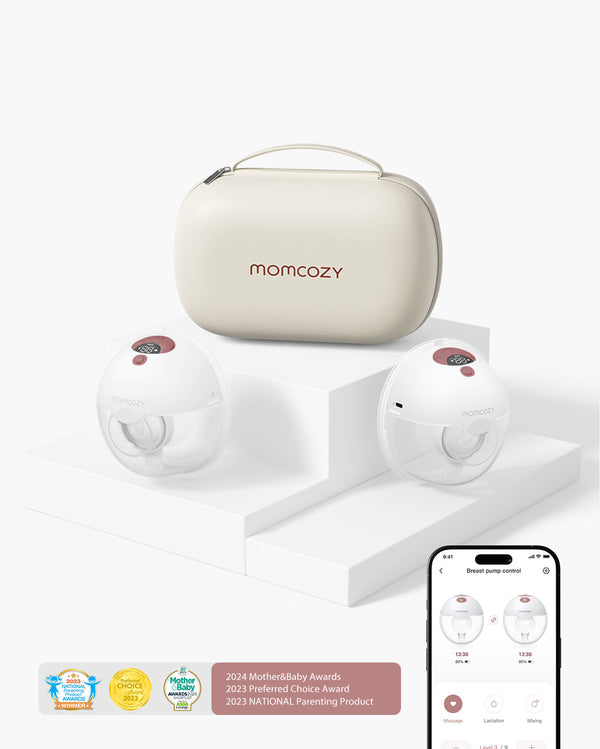


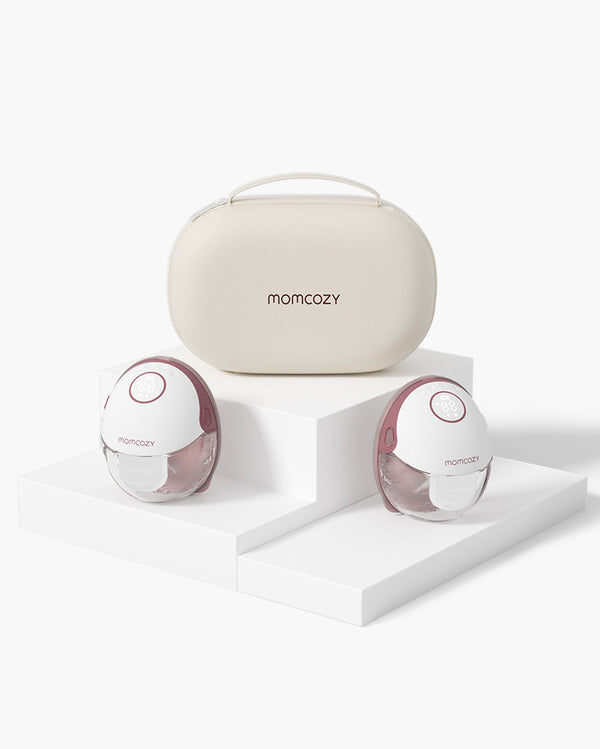

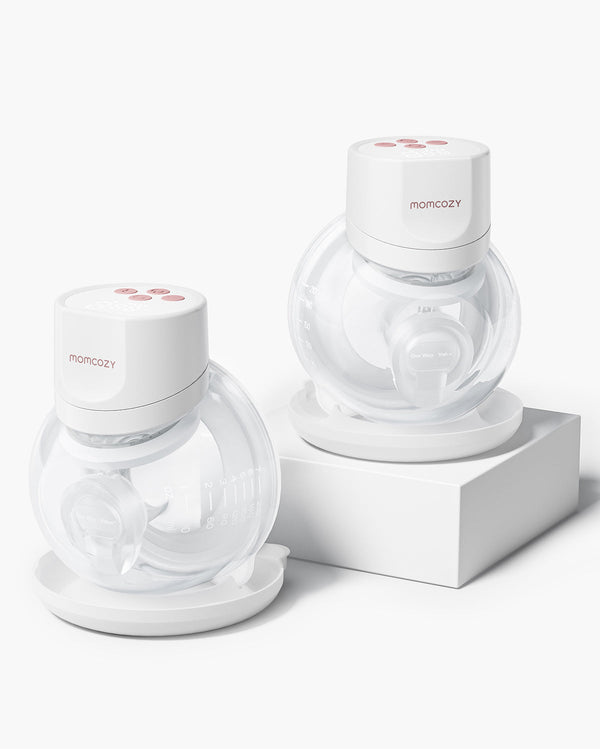

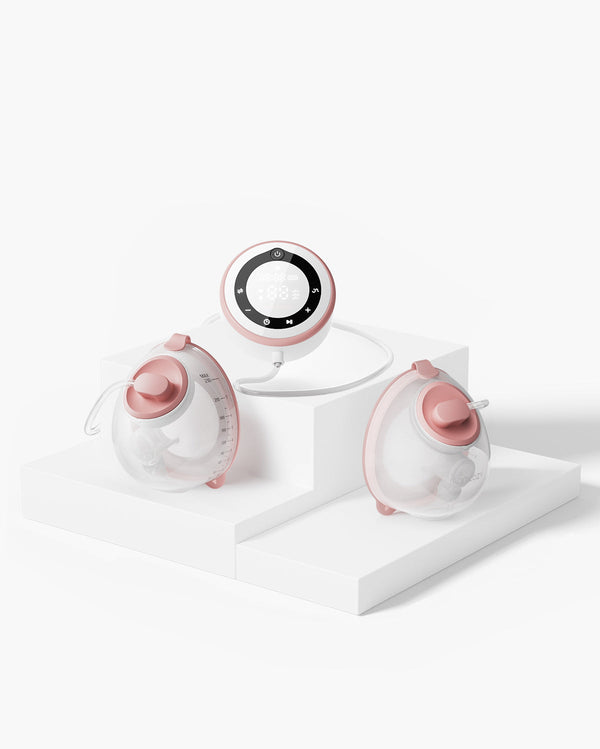


Compare All Wearable Breast Pump Models
Every Momcozy wearable breast pump is built for hands-free pumping — the table below lets you compare all models side by side before deciding.
| Model | Suction | Battery / Sessions | Weight | Noise | Model Highlight | Modes | App | Price |
|---|---|---|---|---|---|---|---|---|
| W1 | Up to -295 mmHg | 2200 mAh / 10 sessions | 325 g | ≤50 dB | Warm massage + Milk Boost™; comfort-focused | 4 modes (Stimulation, Expression, Mix, Milk Boost™) | Yes | $329.99 |
| Air 1 | Up to -285 mmHg | 1800 mAh / 6–7 sessions (15 w/ case) | 260 g (w/o flange) | ≤45 dB | Ultra-slim; charging case; app-controlled precision | 3 modes + Custom | Yes | $369.99 |
| M9 | Up to -300 mmHg | 1800 mAh / 4–5 sessions | 302 g | ≤42 dB | Strongest suction; app control; 15 levels | 3 modes + Custom | Yes | $269.99 |
| M6 | Up to -295 mmHg | 1350 mAh / 5–6 sessions | 293 g | ≤48 dB | Balanced performance for daily use | 3 modes | No | $229.99 |
| M5 Smart | Up to -285 mmHg | 1300 mAh / 4–5 sessions | 230 g | ≤48 dB | Lightweight + app control; easy daily pumping | 3 modes | Yes | $199.99 |
| V1 Pro | Up to -300 mmHg | 2300 mAh / 7–9 sessions | 280 g (motor) | ≤53 dB | Hospital-grade suction; long battery life | 3 modes | No | $199.99 |
| V2 Pro | Up to -288 mmHg | 1800 mAh / 4–6 sessions | 127 g (motor) | ≤48 dB | Ultra-light motor; travel-friendly | 3 modes | No | $199.99 |
| S12 Pro Quick | Up to -292 mmHg | 1350 mAh / 7–8 sessions | — | ≤46 dB | Quick clean design; faster pumping; beginner-friendly | 3 modes | No | $139.99 |
| S9 Pro | Up to -285 mmHg | 1600 mAh / 5–6 sessions | 250 g | ≤50 dB | Strong suction; simple & reliable | 2 modes | No | $119.99 |
Hands-Free vs. Wearable Breast Pump: What's the Difference — and Why It Matters
You've probably seen both terms — hands-free breast pump and wearable breast pump — used interchangeably. But they're not quite the same thing, and understanding the difference can help you choose the right pump for your lifestyle.
A hands-free breast pump means your hands are free during the session — you don't need to hold flanges or bottles in place. That's the baseline.
A wearable breast pump — also called an in-bra pump, wireless wearable pump, or portable wearable pump — goes further. It fits entirely inside your bra, runs on battery, and moves with you. You're not just hands-free; you're completely free.
Why more moms are choosing wearable breast pumps
Traditional hands-free setups — like pairing a pumping bra with a standard electric pump — do free your hands. But you're still tethered to a machine, a power outlet, or a dedicated pumping space.
Today's wearable electric breast pumps remove those limits entirely:
- No cords, no outlets — rechargeable battery means you pump anywhere
- Hidden in your bra — no visible bottles, tubes, or equipment
- Pump while moving — walk, work, drive, or run errands during a session
- Quiet enough for shared spaces — office, commute, or living room
That said, "hands-free" still has a specific meaning worth understanding — especially when comparing pump types:
- No need to hold bottles during pumping — Traditional pumps often require you to hold external bottles or flanges against your breast. A true hands free setup does not require manual support.
- Milk collector stays in your bra — In most wearable designs, the milk collector sits directly inside your nursing bra, allowing the pump to stay in place without hand support. As long as the collector is worn in-bra (not a hanging bottle), it can be considered hands free.
- No bottle-based setup — Hands free pumping typically avoids external bottles connected to the breast. Bottle-based systems usually require hand support unless additional support (like a pumping bra) is used.
- Tubing is optional — A hands free pump can still include tubing between the motor and the milk collector. As long as the collector is worn inside the bra and does not require hand support, it is still considered hands free.
- External motor is still hands free — Some pumps have a separate motor connected via tubing. These can still be hands free if the milk collector remains securely positioned in the bra without needing to be held.
Hands-Free Pump vs Hands-Free Pumping Bra
A hands free breast pump is different from a hands-free pumping bra — but the two can work together.
A hands-free pumping bra is specially designed to hold the flanges of a traditional pump in place, allowing you to pump without using your hands. This means even a standard bottle-and-tube pump can become hands free when used with the right bra.
- The bra keeps the flange securely positioned on the breast
- No need to manually hold bottles during the session
- Works with traditional electric pumps that normally require hand support
For example, products like Momcozy pumping bras are designed to convert traditional pumps into hands free setups by stabilizing the flange against the breast.
Wearable Electric vs Traditional Pump
A wearable electric breast pump is designed for mobility and discretion — allowing you to pump without interrupting your day. Compared to traditional electric pumps, the difference is less about suction and more about how and where you can pump.
Here’s how the two compare on the factors that matter most to everyday use:
Why Wearable Pumps Are Preferred for Daily Use
The key advantage of a wearable electric pump is freedom of movement and discretion, not suction strength.
Wearable pumps sit inside your bra, allowing you to pump without interrupting your routine or drawing attention. You can pump at your desk, during your commute, or around others without needing a dedicated pumping space.
Traditional pumps, by comparison, often require:
- A flat surface or setup area
- External bottles and tubing
- A more private or stationary environment
For moms balancing work, travel, or daily activities, this difference can significantly improve consistency and convenience.
Models like Air 1 are designed specifically for:
- Ultra-slim, in-bra wear
- Lower noise for shared environments
- App-controlled sessions without manual adjustment
Wireless, Cordless & Portable — Explained
These terms are often used together in breast pump shopping, but they do not all mean the same thing.
Wireless / Cordless
In the breast pump category, wireless and cordless are usually used to mean the same thing: the pump runs on a rechargeable battery instead of staying plugged into a wall outlet. In other words, there is no power cord during pumping.
Tube-Free
Tube-free means there is no tubing between the motor and the milk collector. This is different from wireless or cordless. A pump can be wireless and still use tubing, as long as it runs on battery power rather than wall power.
Portable
A portable breast pump is designed to be easy to carry and use away from a fixed pumping station. Portability is about mobility and convenience, not whether the pump has tubing. Some portable pumps are tube-free all-in-one wearables, while others use a small external motor connected by tubing.
In short:
- Wireless / Cordless = no power cord to the wall during pumping
- Tube-free = no tubing between motor and collector
- Portable = easy to carry and use on the go
How to Get More Milk When Pumping?
Pumping Modes: Stimulation, Expression & Mixed
Most breast pumps use different modes to mimic a baby’s natural feeding pattern:
- Stimulation mode — faster, lighter suction to help trigger let-down
- Expression mode — slower, deeper suction once milk starts flowing
- Mixed mode — alternates patterns to maintain flow and improve efficiency
Switching modes at the right time can help support better milk flow and reduce pumping time.
Suction Range: Comfort Matters More Than Maximum
Breast pump suction is measured in millimeters of mercury (mmHg). Most pumps list a maximum suction level, but this does not reflect how pumping actually works during a session.
- Peak suction refers to the highest possible vacuum level
- Actual suction varies depending on mode and settings
- Higher suction does not always mean more milk
- The most effective level is the highest comfortable suction
Clinical and user guidance place effective suction within a range of about -100 to -300 mmHg, with comfort between -150 to -250 mmHg.
Flange Size: How to Measure + Size Guide
The flange must match your nipple diameter. An incorrect size is a common cause of low output.
| Nipple Diameter | Recommended Size |
|---|---|
| 14–16 mm | 17 mm insert |
| 17–18 mm | 19 mm insert |
| 19–20 mm | 21 mm insert |
| 21–23 mm | 24 mm (default) |
| 24–26 mm | 27 mm |
Signs of wrong fit: Too small—rubbing/pain; Too large—areola pulled in.
Warm Compress: Support Let-Down
Applying a warm compress before or during pumping can help support let-down and make milk flow feel more comfortable. Warmth encourages blood circulation and supports oxytocin release.
- Apply a warm towel or compress for 3–5 minutes before pumping.
- Especially helpful if milk flow feels slow or inconsistent.
Relaxation & Mindset: Flow Follows Comfort
Your mental state plays a key role in milk flow. Stress or discomfort can interfere with let-down, while a relaxed environment supports more consistent output.
- Choose a pump that lets you move freely.
- Pump in a comfortable, familiar environment.
- Focus on staying relaxed — your body responds better.
Wearable pumps like Momcozy Wellness 1 (W1) support a relaxed experience with gentle warming.
Comfort & Fit: Better Flow and Output
Comfort plays a critical role in maintaining effective pumping throughout a session. While comfort does not change the pump’s suction level, it directly affects how well the pump seals, how relaxed you feel, and how consistent the suction remains.
A proper fit and comfortable environment are essential for supporting your body's natural milk ejection reflex and maximizing overall output.
FAQs
- Choosing a selection results in a full page refresh.